Identify, analyse, and manipulate the relationships between parts within a given set.
MAGCD Y1 U1 2026–27
Harvard CURIOSity
Jacques Burkhardt
Scientific Drawings
Taxonomic Classifications = Animalia
Common Names = Turtle
Getting start
For this project, I selected 99 records of turtle drawings from the Jacques Burkhardt Scientific Drawings collection in Harvard University’s digital archive, CURIOSity. Then, I started by analyzing my set.


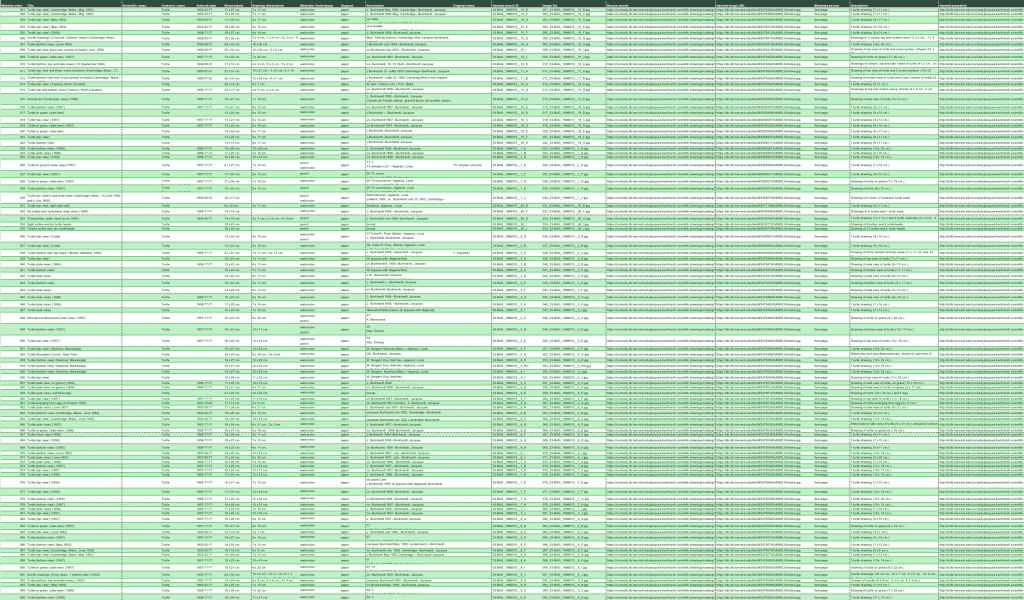
To analyse these records, I used codex to extract and organise all the available information from the Harvard archive website into a spreadsheet.
Components
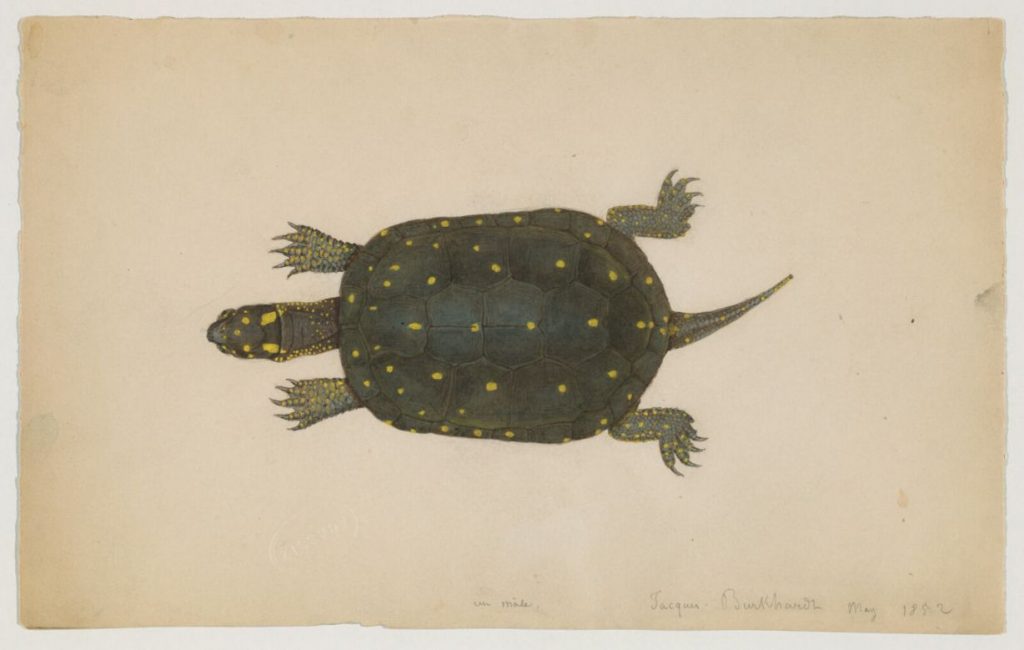
01 Drawing
02 Metadata
Title, date, dimensions, materials, annotations
Record: 003
Title: Turtle (top view)
Date: 1852-05
Drawing size: 9 × 17 cm
Materials: Watercolour
03 Catalogue System
Categories, identifiers,
search, display
Harvard search filters
Common Names: Turtle
Classification: Animalia
Results: 99 records
Similarities
Named Turtle
On paper
Shared metadata structure
Differences
How Are They Held Together?
Formally
Shared metadata fields
Catalogue IDs
Searchable categories
Digital interface
Conceptually
Scientific observation
Different viewpoints
Anatomical details
Comparison
Three Grammars
01 Observation
Object + Viewing Position
Turtle (top view) / Turtle (bottom view)
02 Fragmentation
Whole body → Multiple views → Body parts
03 Metadata
Drawing → Description → Searchable record
What patterns are invisible across the set?
Scientific name
0 / 99
Artwork dates
23 / 99
Annotations
Sex / Location / Missing
Experiment extensively with 3–4 new methods of cataloguing that reconfigure the purpose, value, and meaning of the individual components and the set.
01. How the Turtle Was Observed
RECLASSIFYING
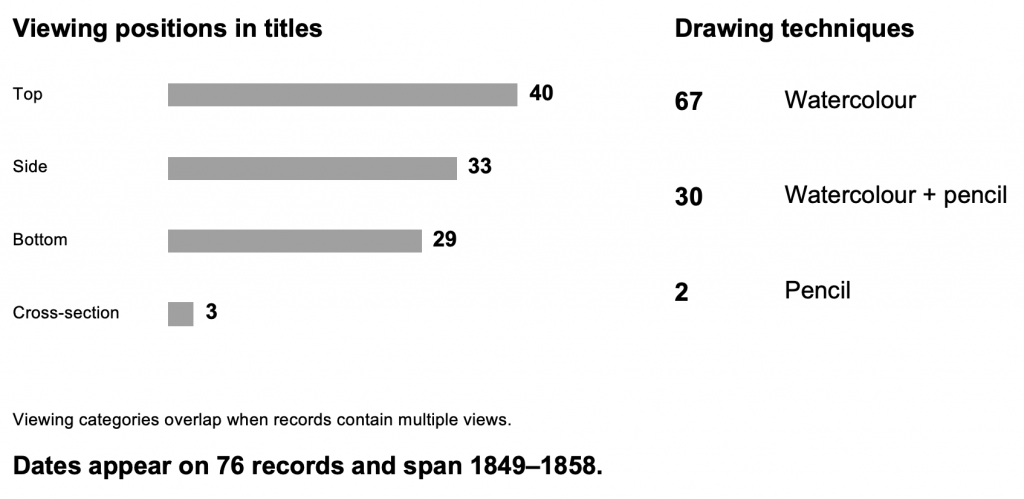
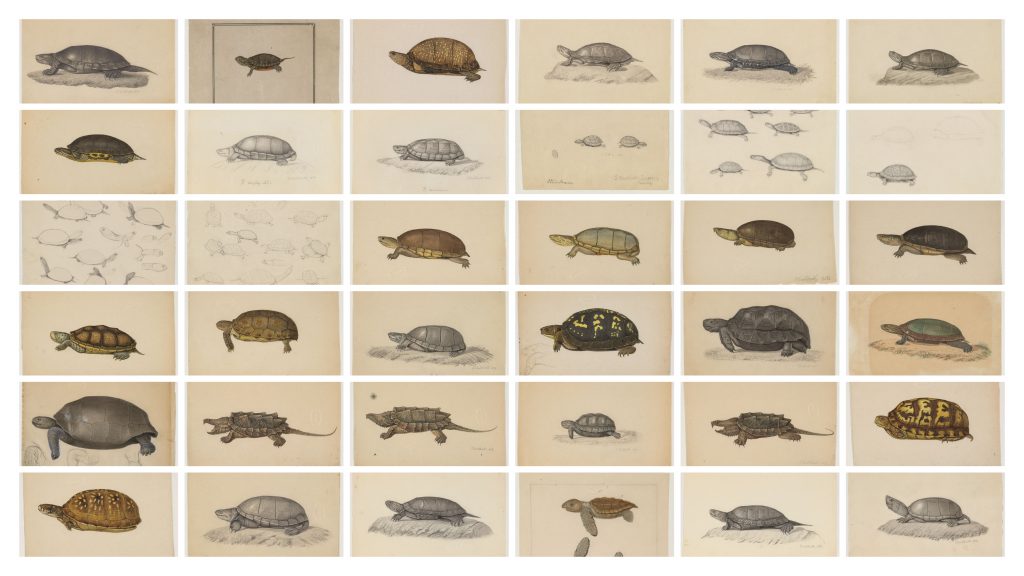
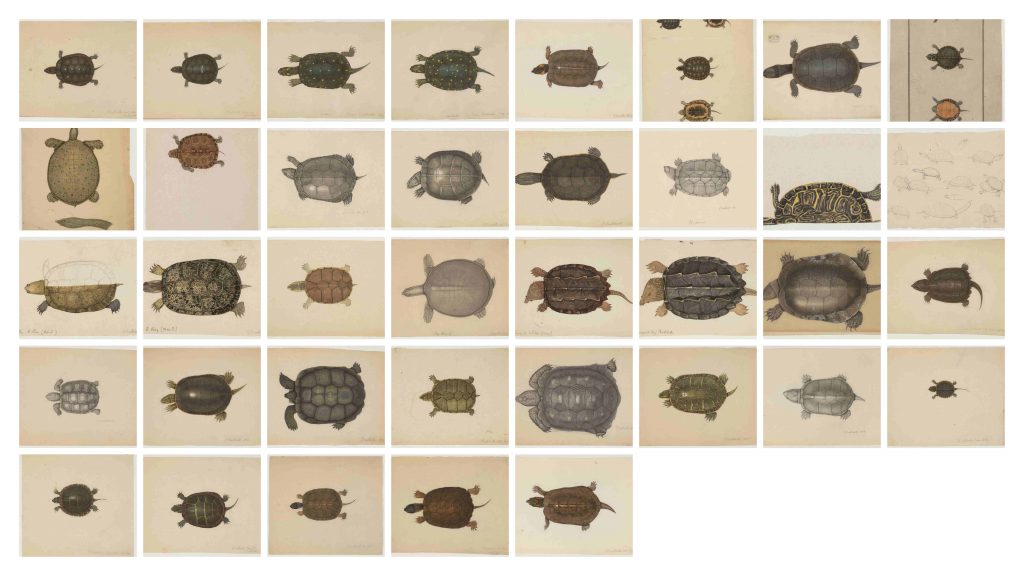
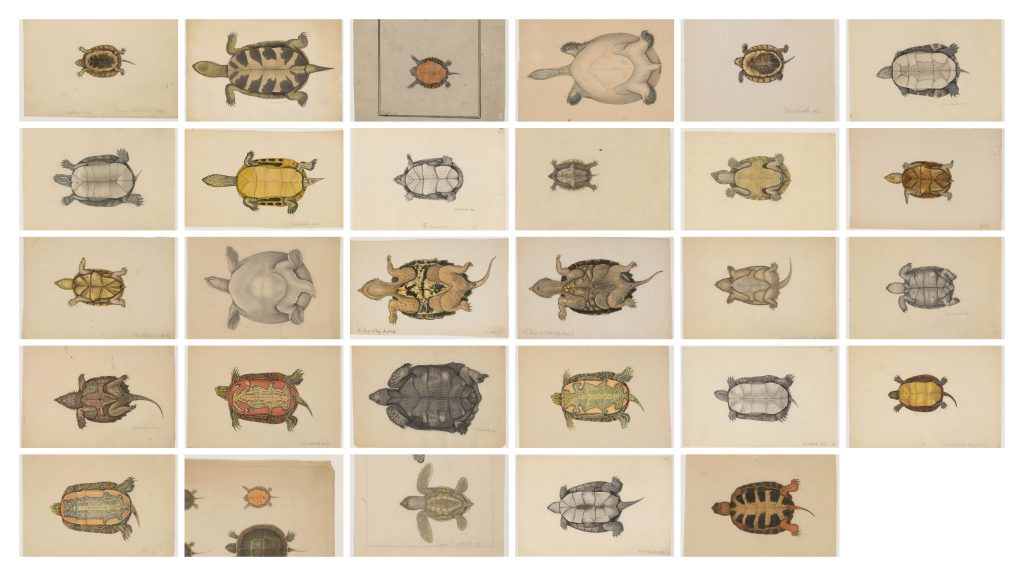
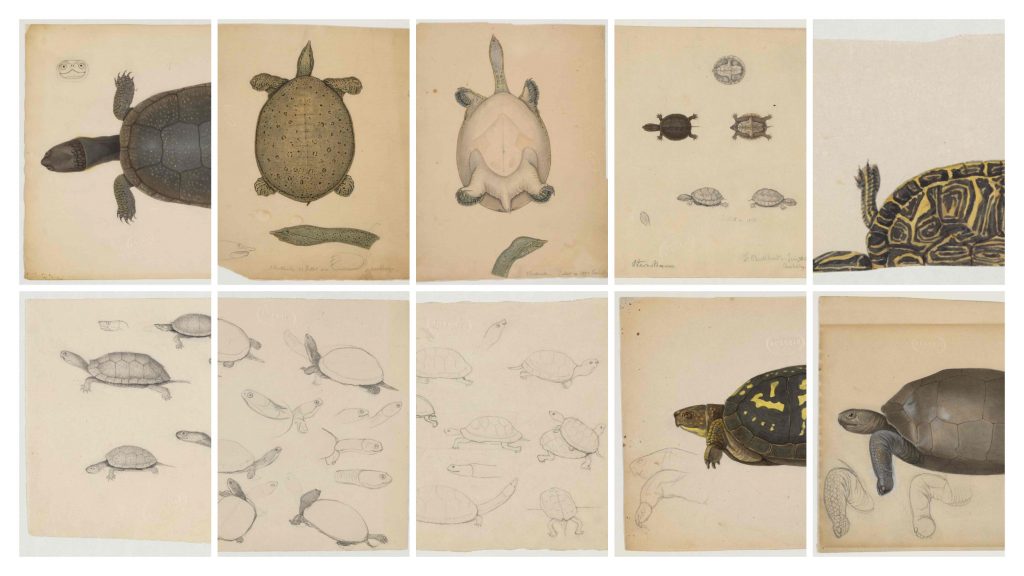
Reclassify 99 records by bodily position, exposure and possible handling.
Viewed from the Side
Viewed from the Above
Turned Over
the turtle’s most vulnerable, passive, exposed state
Sectioned
In Action
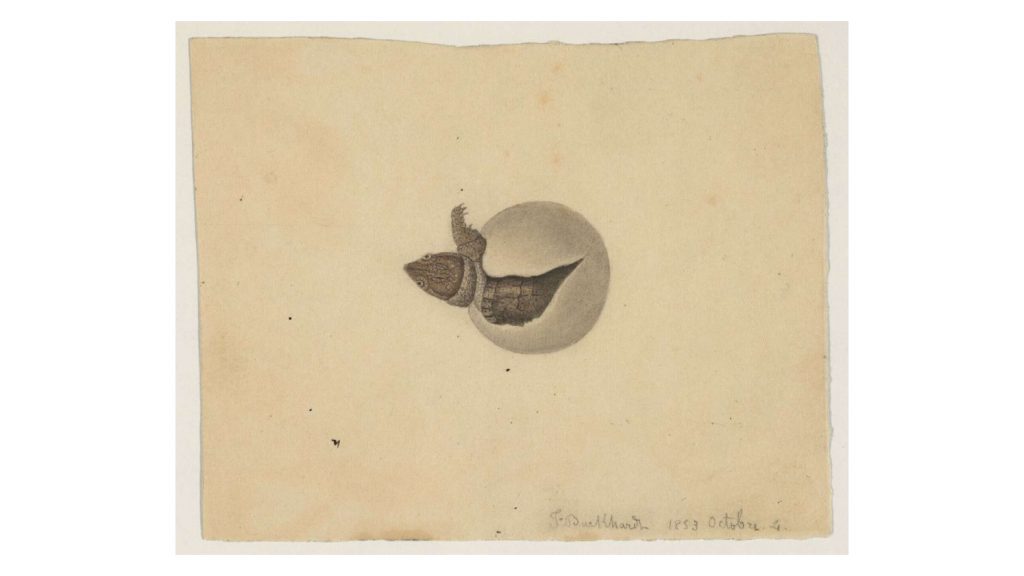
Opposite
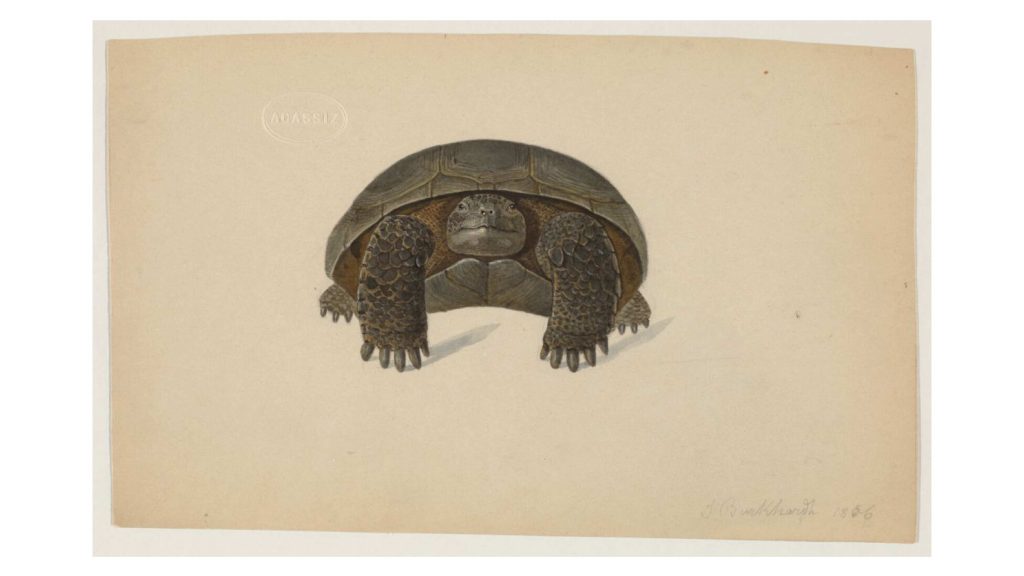
A viewing angle becomes a question about the animal’s bodily condition and the observer’s role.
Leave a Reply