Identify, analyse, and manipulate the relationships between parts within a given set.
MAGCD Y1 U1 2026–27
Harvard CURIOSity
Jacques Burkhardt
Scientific Drawings
Taxonomic Classifications = Animalia
Common Names = Turtle
Getting start
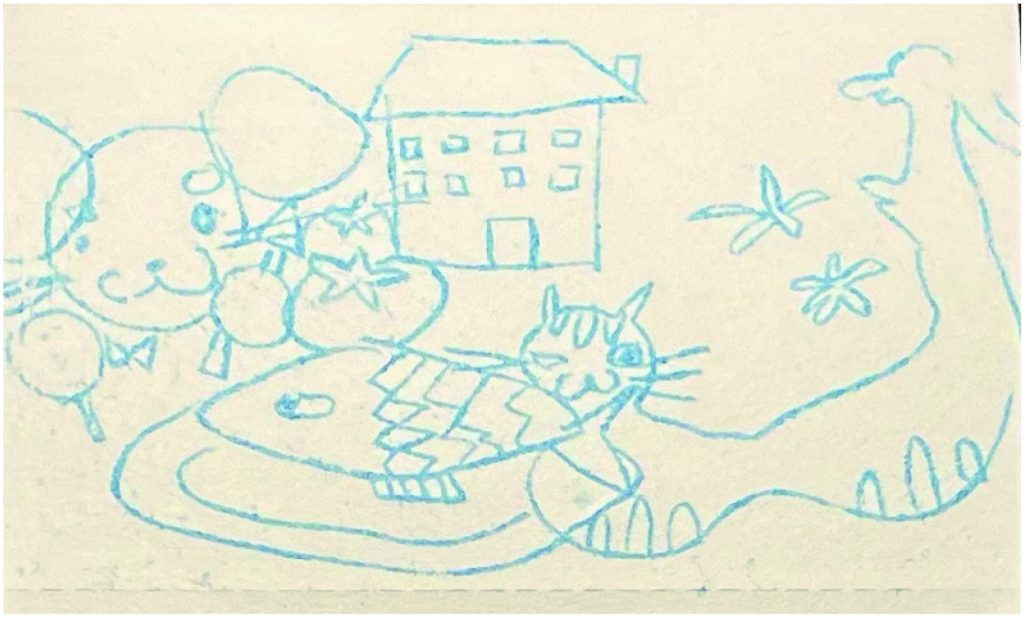
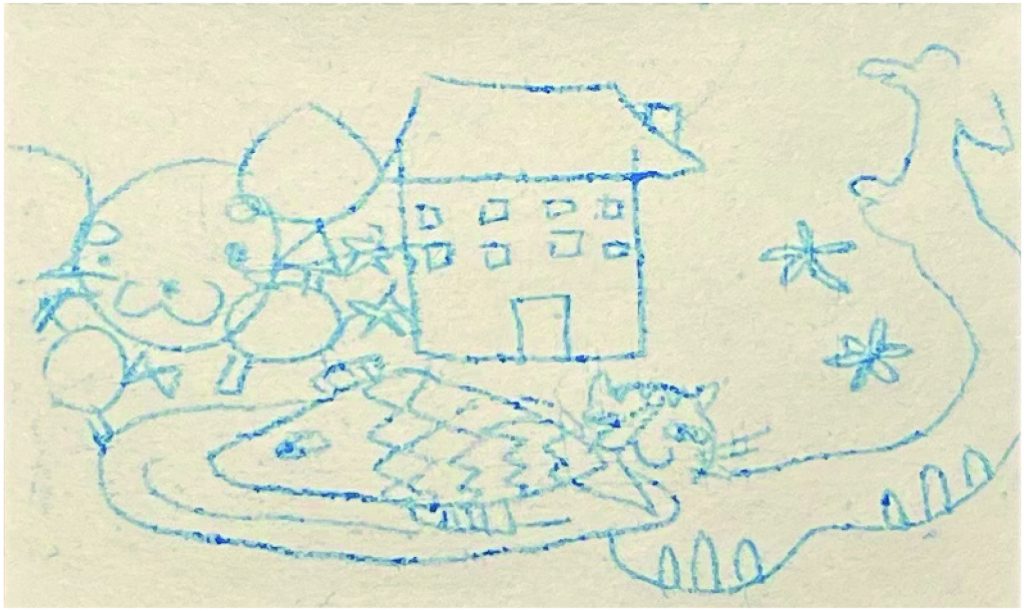
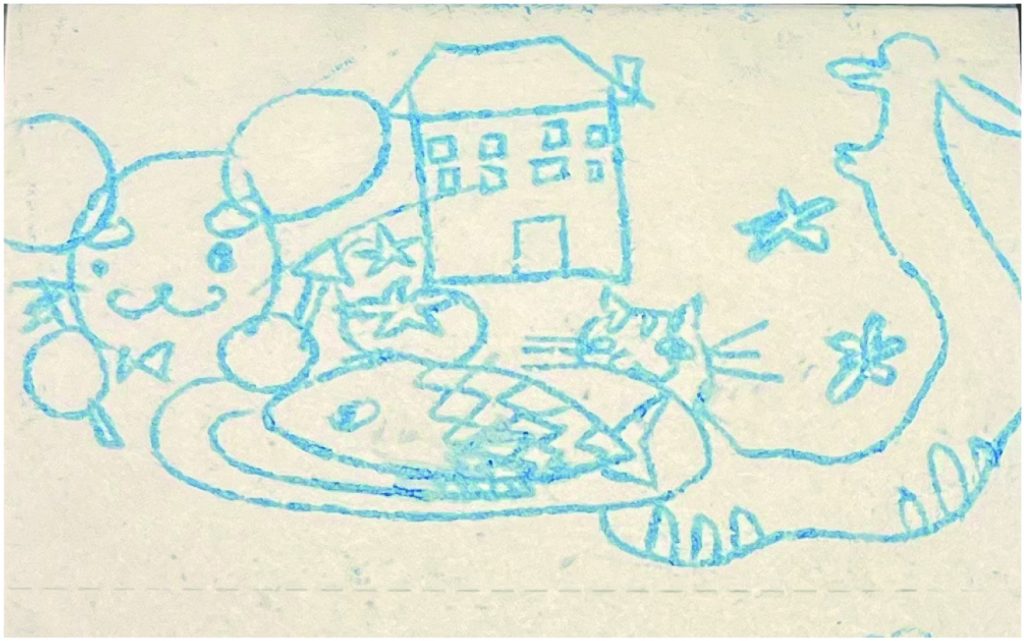
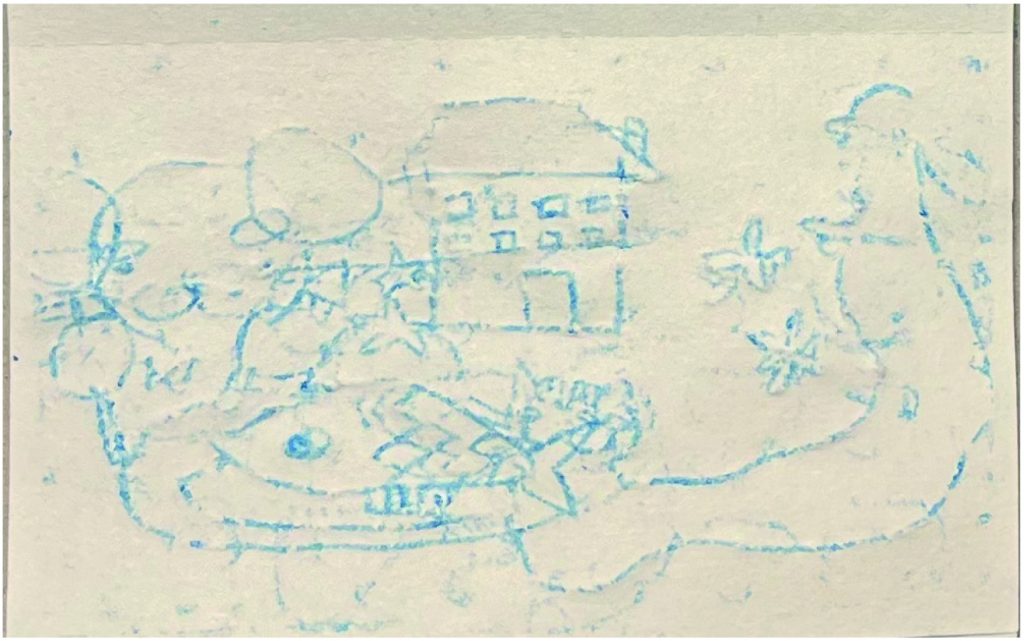
For this project, I selected 99 records of turtle drawings from the Jacques Burkhardt Scientific Drawings collection in Harvard University’s digital archive, CURIOSity. Then, I started by analyzing my set.


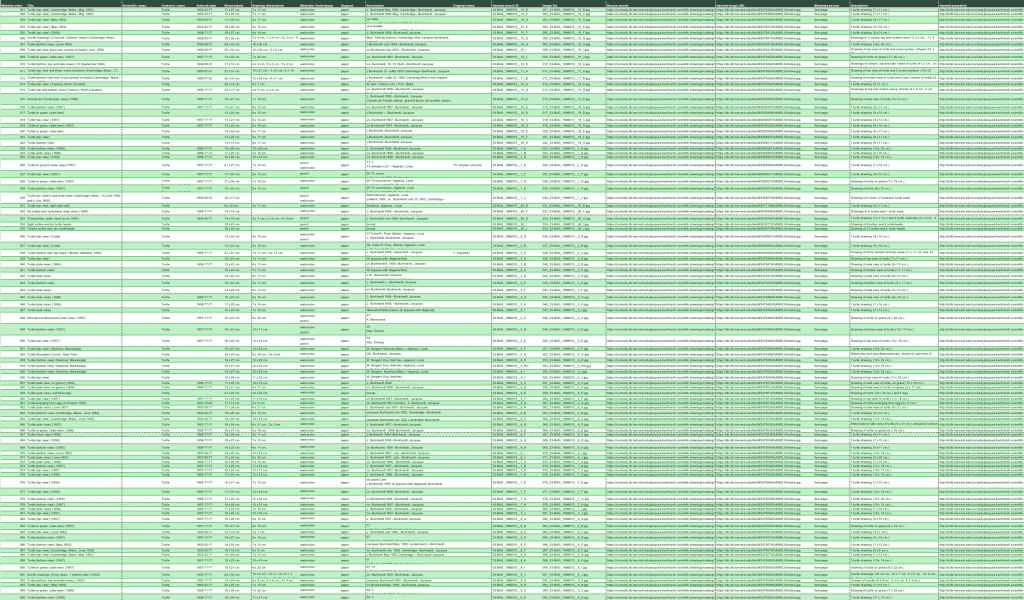
To analyse these records, I used codex to extract and organise all the available information from the Harvard archive website into a spreadsheet.
Components
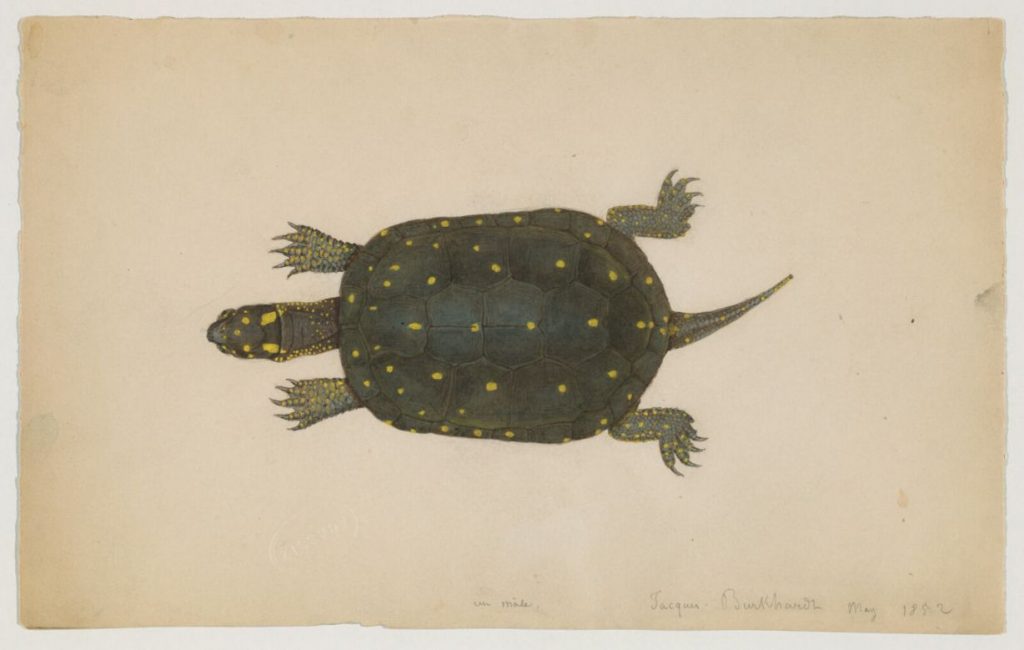
01 Drawing
02 Metadata
Title, date, dimensions, materials, annotations
Record: 003
Title: Turtle (top view)
Date: 1852-05
Drawing size: 9 × 17 cm
Materials: Watercolour
03 Catalogue System
Categories, identifiers,
search, display
Harvard search filters
Common Names: Turtle
Classification: Animalia
Results: 99 records
Similarities
Named Turtle
On paper
Shared metadata structure
Differences
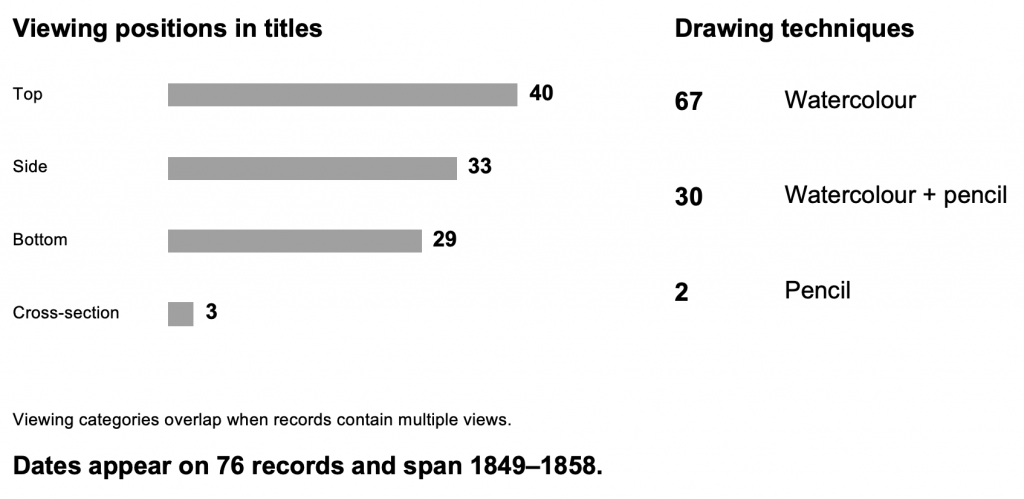
How Are They Held Together?
Formally
Shared metadata fields
Catalogue IDs
Searchable categories
Digital interface
Conceptually
Scientific observation
Different viewpoints
Anatomical details
Comparison
Three Grammars
01 Observation
Object + Viewing Position
Turtle (top view) / Turtle (bottom view)
02 Fragmentation
Whole body → Multiple views → Body parts
03 Metadata
Drawing → Description → Searchable record
What patterns are invisible across the set?
Scientific name
0 / 99
Artwork dates
23 / 99
Annotations
Sex / Location / Missing
Experiment extensively with 3–4 new methods of cataloguing that reconfigure the purpose, value, and meaning of the individual components and the set.
01. How the Turtle Was Observed
Classifying / (Re)contextualising
Reclassify 99 records by bodily position, exposure and possible handling.
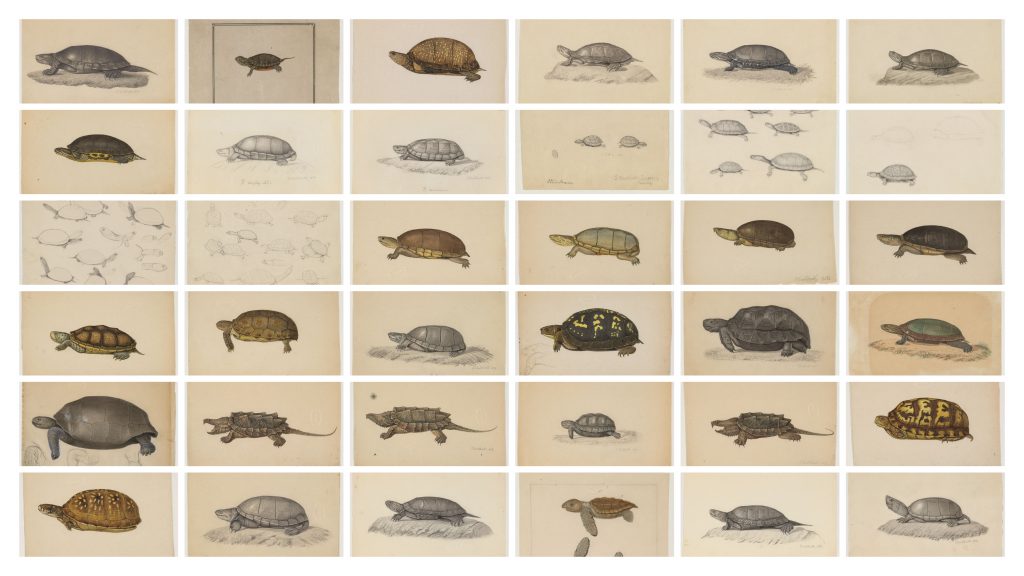
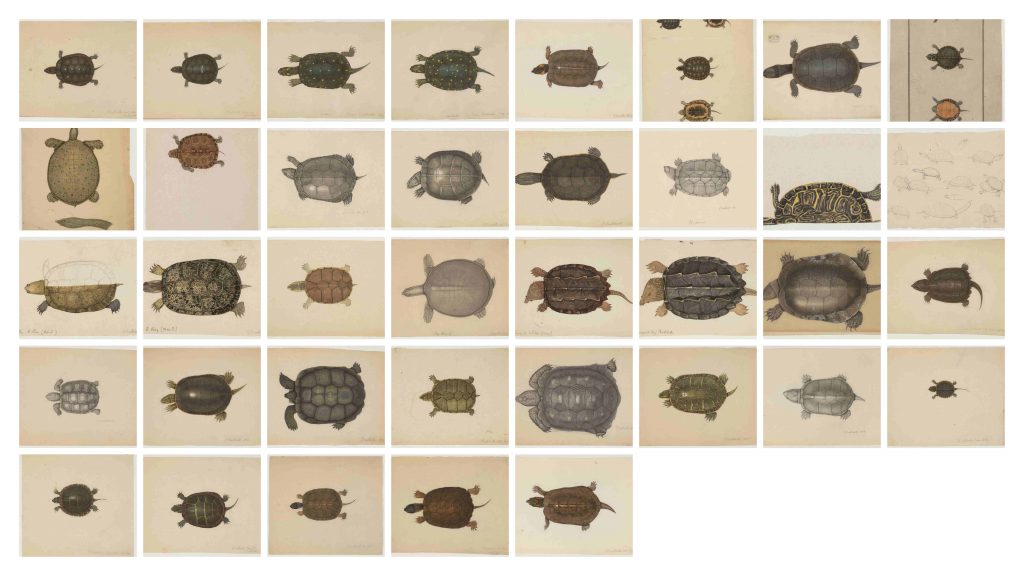
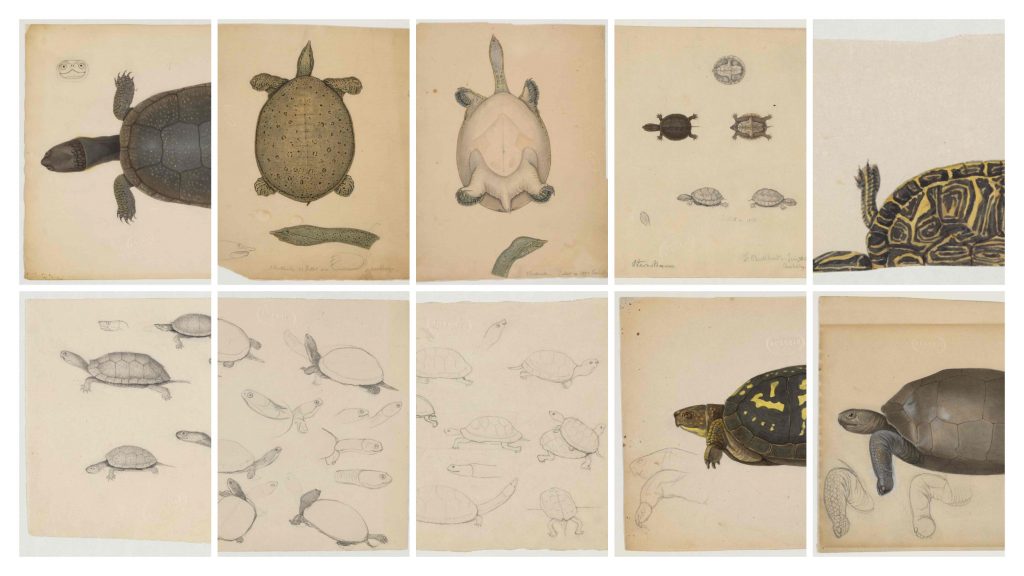
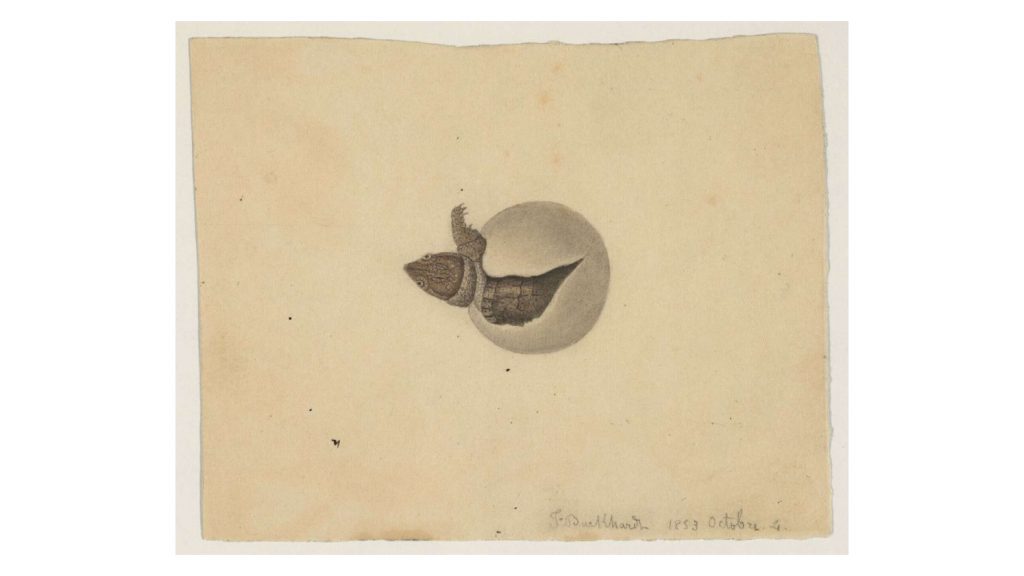
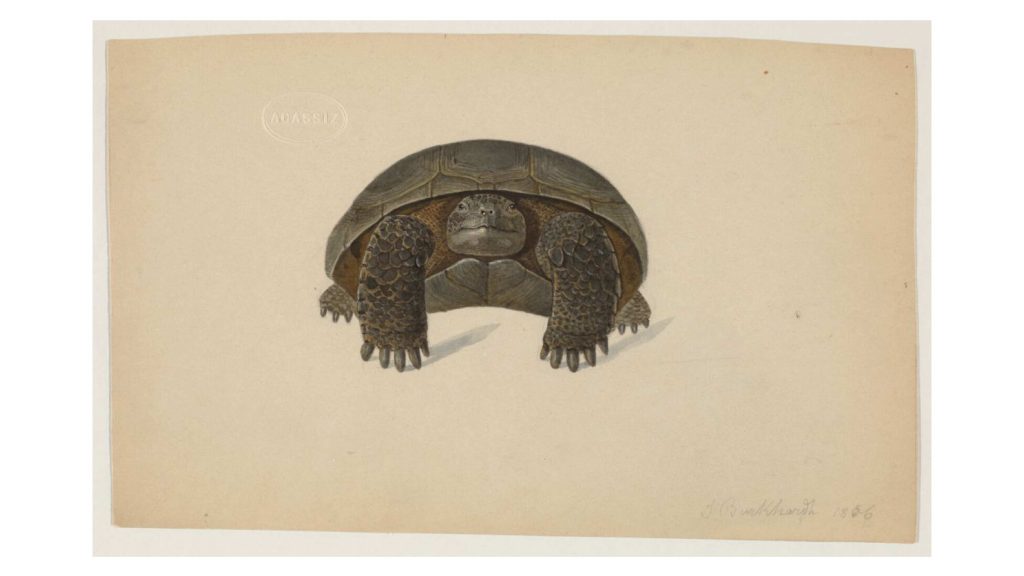
I reclassified all 99 records into six overlapping categories based on the turtles’ bodily positions and conditions, shifting the focus from the observer to the observed animal. For example, I reinterpreted Harvard’s neutral description “bottom view” as “turned over”. While the original term describes a viewing angle, my new category draws attention to how scientific observation may involve positioning, handling and controlling an animal’s body.
Bringing these drawings together created new relationships between them: individually, a bottom-view drawing might seem like a neutral anatomical study, but when grouped with other turned-over turtles and compared with different bodily positions, their exposure and vulnerability become more noticeable. This changes the catalogue from a system of scientific viewpoints into one that invites viewers to consider the animal’s bodily experience.
Viewed from the Side
Viewed from the Above
Turned Over
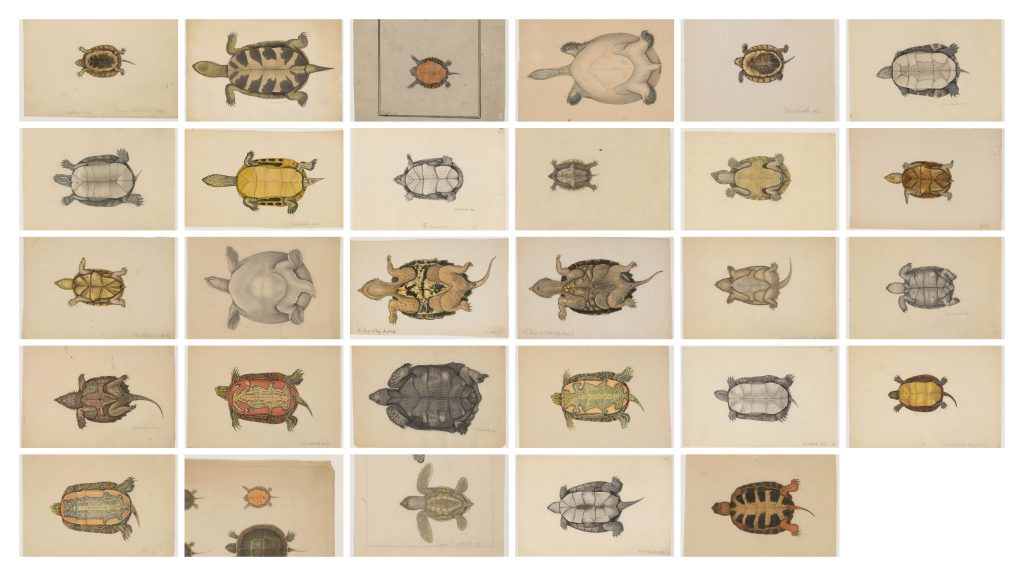
the turtle’s most vulnerable, passive, exposed state
Sectioned
In Action
Opposite
Critical Question
How are turtles observed and treated?
New Organising Principle
Bodily position, exposure, anatomical sections and activity
What Changed?
From the observer’s viewpoint to the observed animal’s bodily condition
New Relationships / Findings
Grouping exposed bodies together can make vulnerability more noticeable
Knowledge Context
Scientific observation, non-human perspectives and bodily control
02. The Absence Index
Taxonomising/ Subverting
Extract and categorise missing, partial and uncertain metadata.
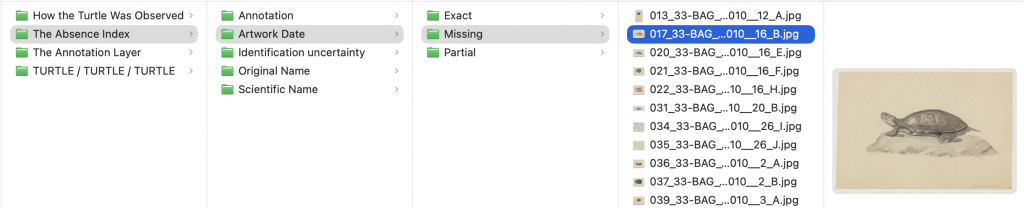
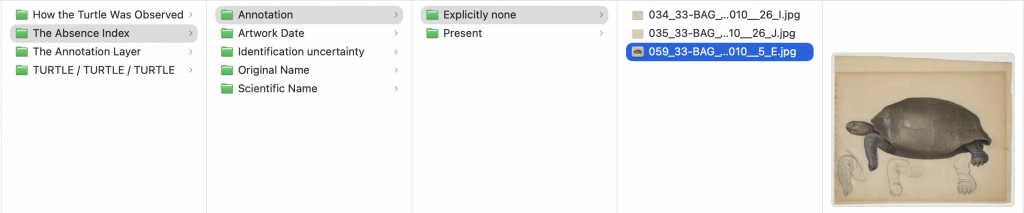
I created an index based on what it does not record or specify. I examined the metadata and grouped records according to missing, partial and uncertain information, including dates, original names, annotations and uncertain identifications. This revealed that absence is not a single condition: missing information, incomplete dates, explicit statements of no annotation and question marks in names represent different levels of knowledge and uncertainty.
Records that were previously unrelated became connected through the gaps they shared. By turning these gaps into searchable categories, I reversed the usual purpose of a catalogue: rather than guiding viewers towards what is known, the new index makes the limits of archival knowledge visible and questions the authority of apparently complete records.



Critical Question
What does the catalogue leave unrecorded or uncertain?
New Organising Principle
Types of absence and degrees of uncertainty
What Changed?
From cataloguing what is known to indexing what is unknown
New Relationships / Findings
Records become connected through shared gaps, revealing different limits of archival knowledge
Knowledge Context
Archival authority, information ethics and the limits of knowledge
03. The Annotation Layer
Hijacking
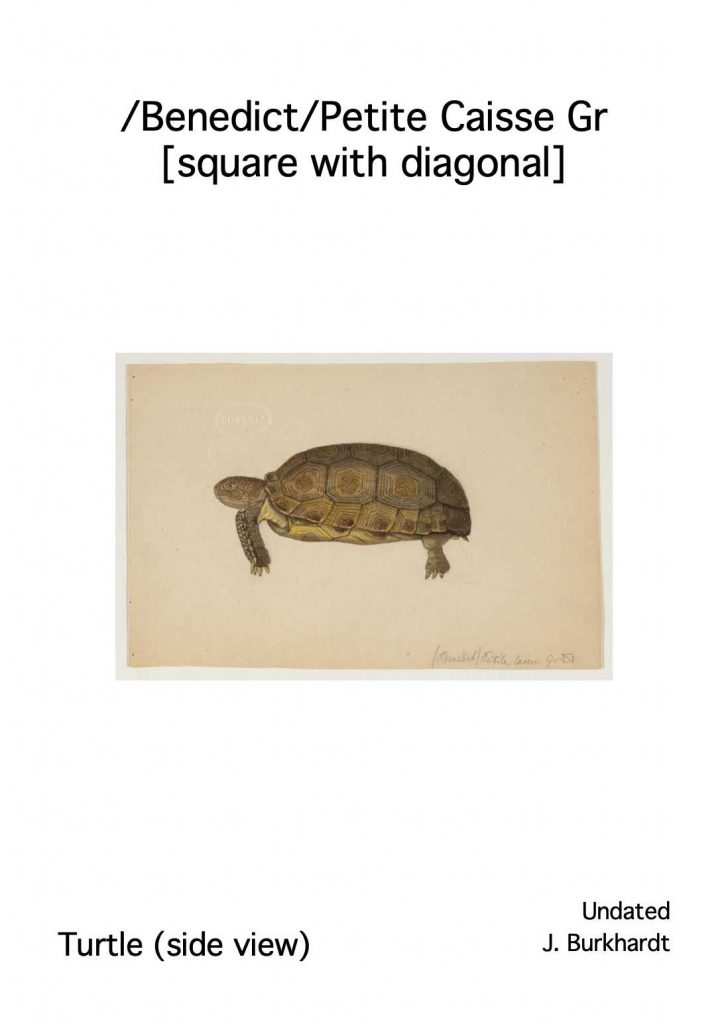
Promote historical annotations to primary titles and move official titles into a secondary position.
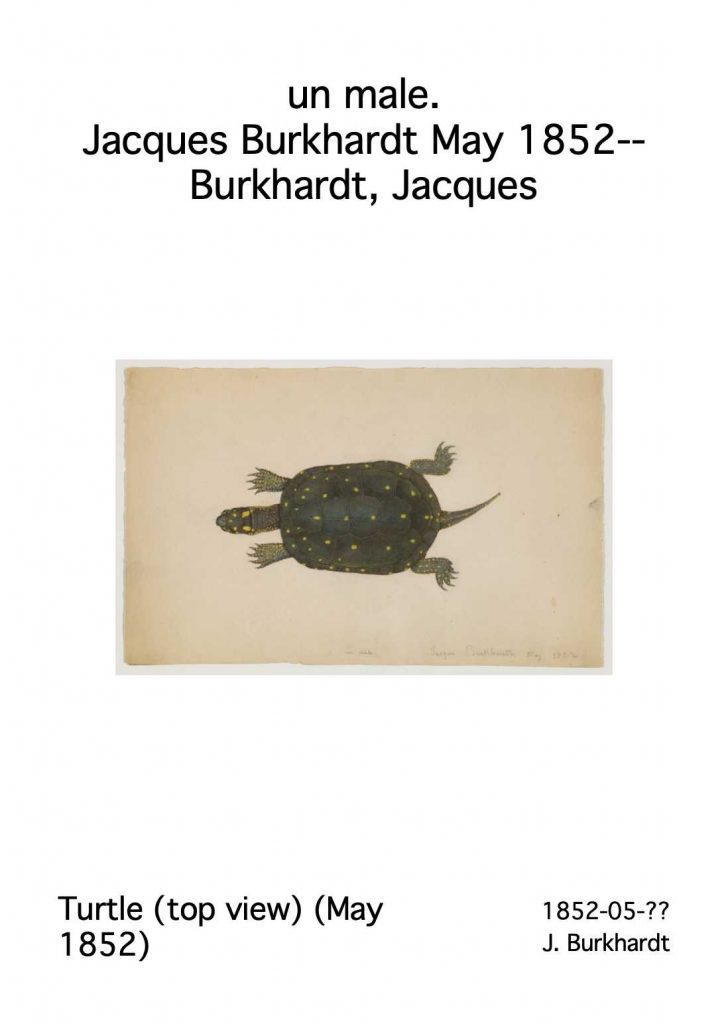
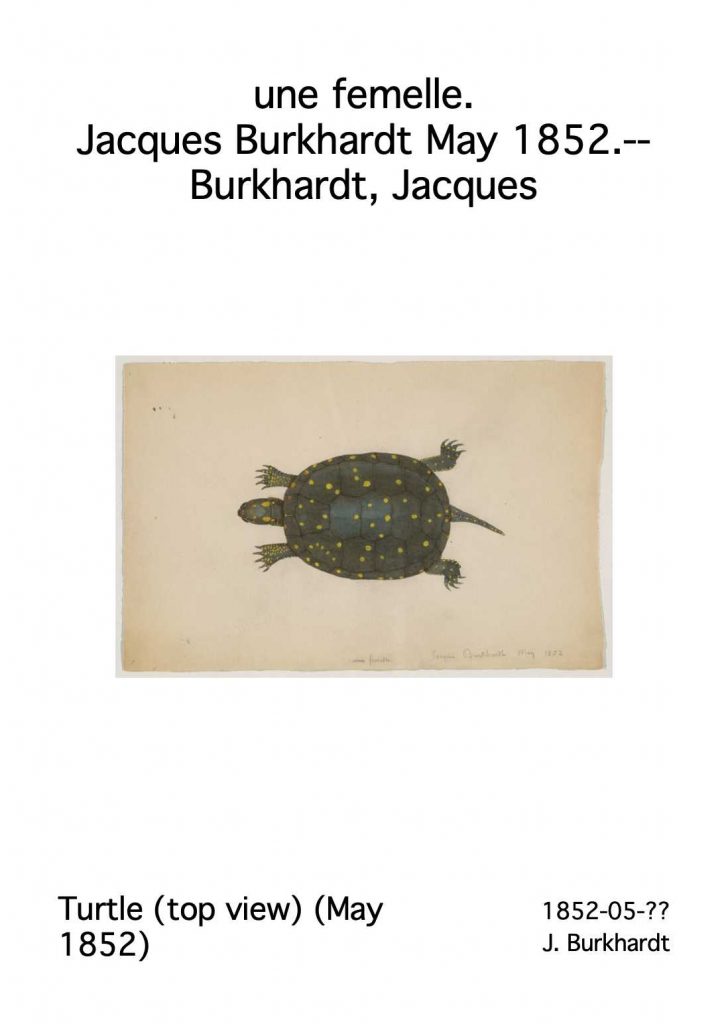
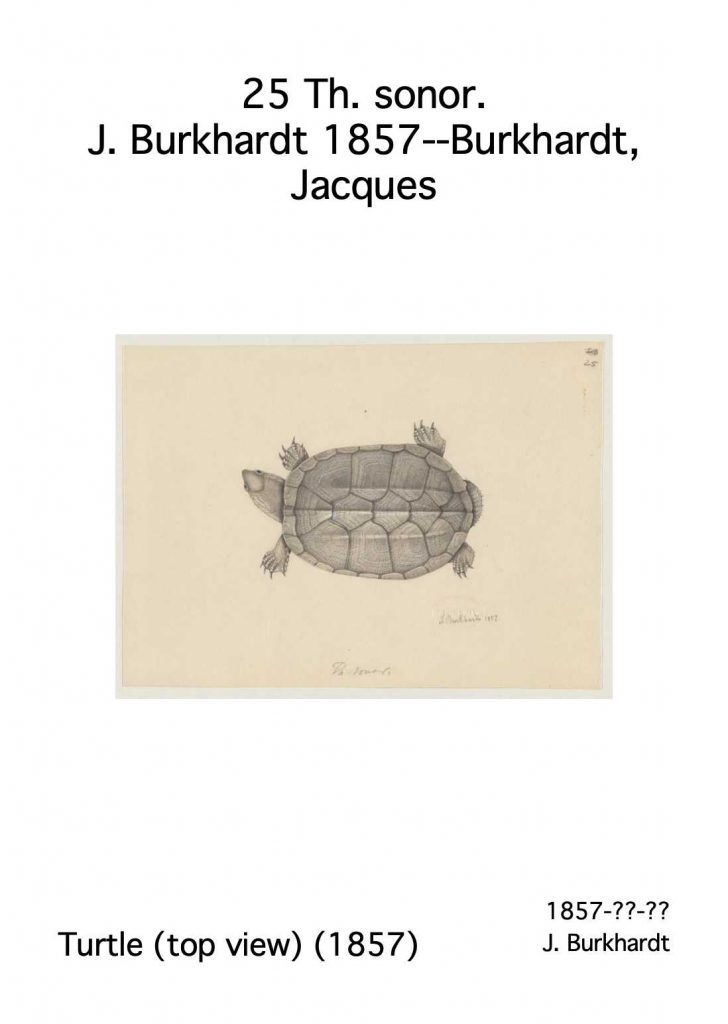
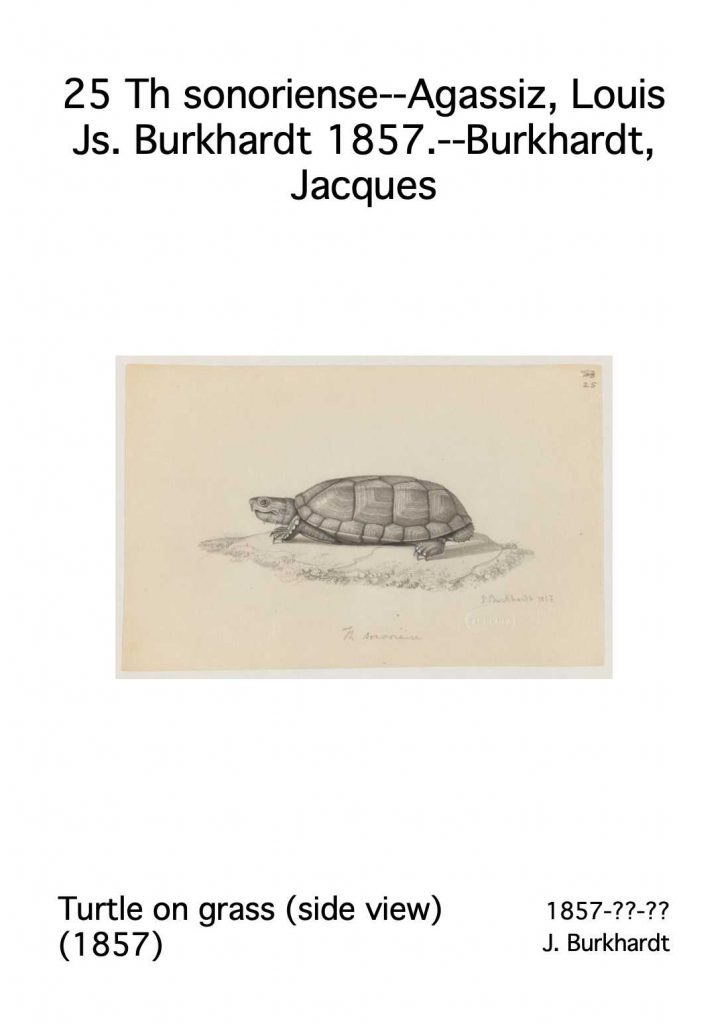
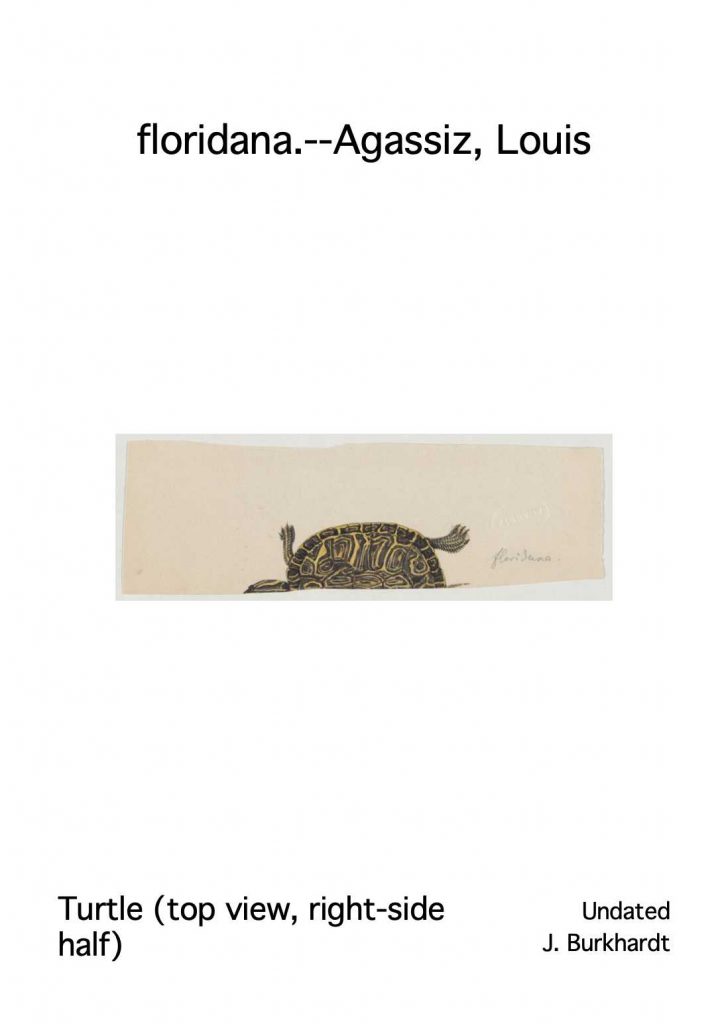
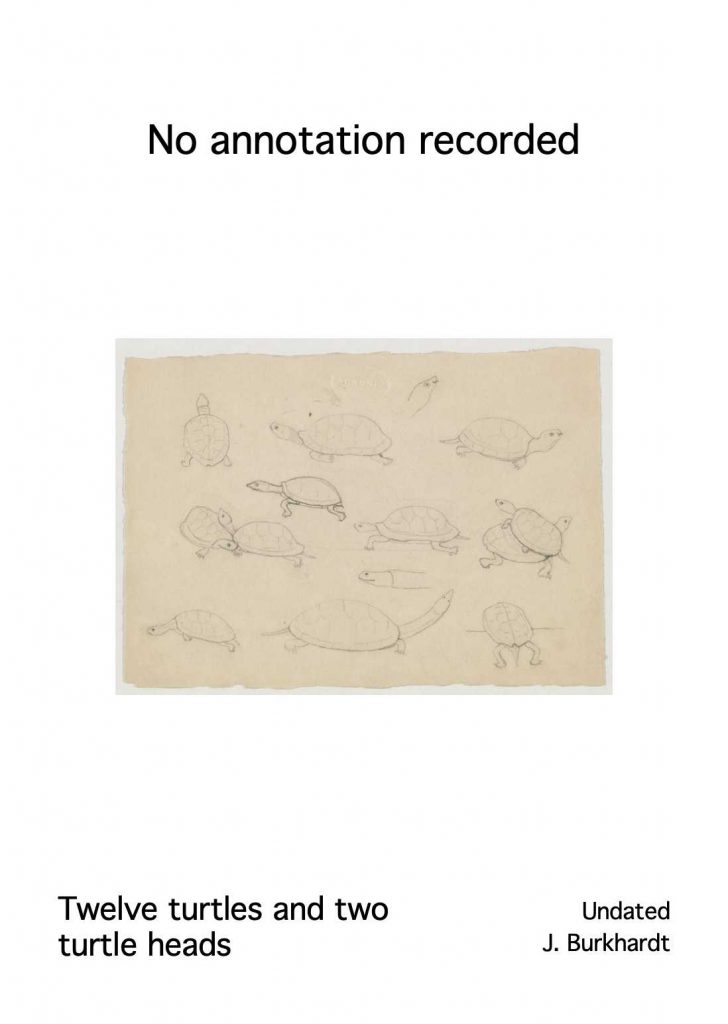
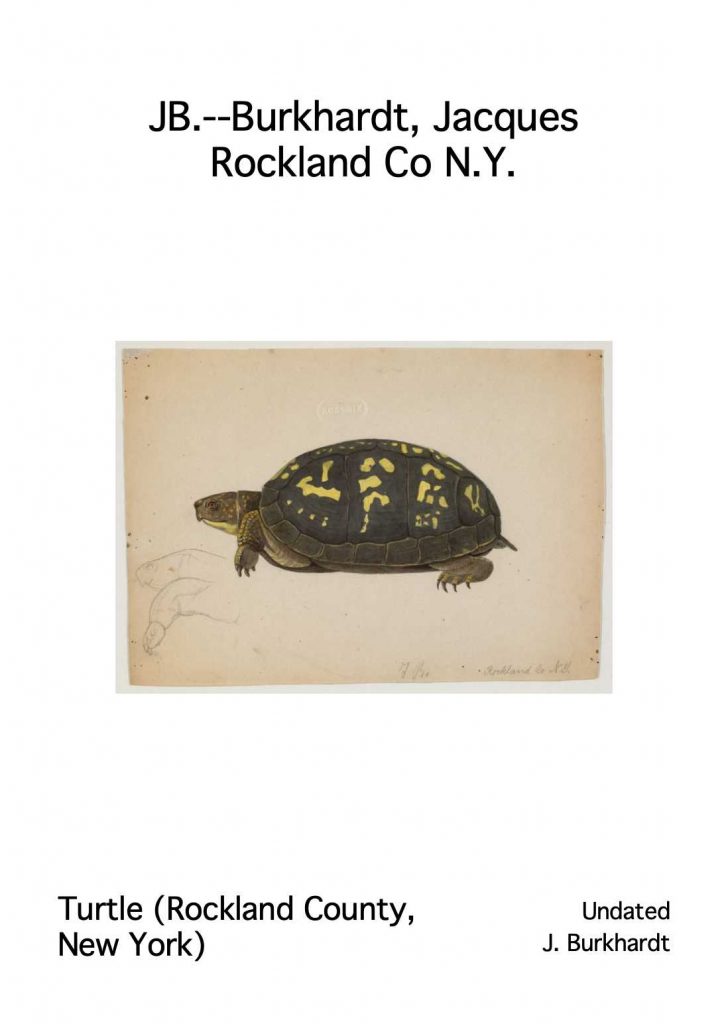
I reversed the information hierarchy of all 99 records by replacing the standardised Harvard titles with their historical annotations as the primary headings, while moving the official titles into a secondary position. The original information remained unchanged, but its visual priority was reversed through typography and layout. In the original catalogue, different drawings are repeatedly introduced through similar titles such as “Turtle (top view)”, while more specific handwritten descriptions, names, languages and symbols are placed within the annotation field.
Bringing these annotations to the foreground changed the starting point for reading each image and made differences between records more noticeable. However, some annotations were difficult to understand, while others were absent, revealing that changing whose words are prioritised does not necessarily make the archive more accessible. The experiment questions how editorial hierarchy determines which descriptions become visible and authoritative.
Critical Question
Who decides which information is given authority?
New Organising Principle
Historical annotations and information hierarchy
What Changed?
From official titles taking priority to historical annotations taking priority
New Relationships / Findings
Changing typography alters which descriptions appear prominent and authoritative
Knowledge Context
Naming, historical voices and the politics of information hierarchy
04. Turtle / Turtle / Turtle
Sequencing
Reorder the original drawings into a continuous animation.
All 99 records are grouped under the same label, “Turtle”. Apparently they are different turtles, but none of them has a scientific name. I rearranged the original drawings into a continuous animation, moving from side views to top views and bottom views, without altering the images themselves. By changing their order and presenting them through time rather than as separate catalogue entries, I created new visual relationships between the records.
This revealed a tension between unity and difference: the catalogue creates a shared identity through the label “Turtle”, while animation creates continuity through successive frames. Yet the changing bodies, patterns and viewpoints continually reveal the differences within that category. The experiment explores how classification and sequencing can construct a sense of sameness while potentially obscuring individuality.
Critical Question
When 99 visually different records appear in sequence under the same label, how do we perceive their similarities and differences?
New Organising Principle
Reordering the drawings by viewing angle to create visual continuity, while keeping their differences visible.
What Changed?
From browsing separate records to experiencing them as a continuous animation.
New Relationships / Findings
The label creates categorical unity, the animation creates visual continuity, and the changing bodies keep revealing the differences that both try to smooth over.
Knowledge Context
How visual differences are brought together under one identity. And how sequencing can create continuity while potentially obscuring individuality.